한국어
한국어 
3D baking is the process of pre-calculating and saving complex data -such as high-resolution surface details, lighting, or shadows- into flat 2D image files called texture maps.
This allows lightweight 3D models to display rich, realistic visuals in real time without overloading computers or game engines.
How Baking Works
- High-to-Low Transfer: Software shoots invisible lines from a detailed high-poly model to record its bumps and curves onto a simpler low-poly model.
- Lighting and Shadows: Static light behavior and shadows are computed once and frozen onto the object’s surface so the computer does not have to calculate them live.
- Map Creation: Results are saved into distinct image files like normal maps, ambient occlusion maps, and roughness maps.
Why It Matters
- Performance Boost: Lowers polygon counts so games and apps run smoothly on phones, web browsers, and consoles.
- Maintains Quality: Preserves the look of tiny wrinkles, scratches, and fine edges on simple shapes.
- Saves Time: Prevents real-time rendering lag during interactive experiences
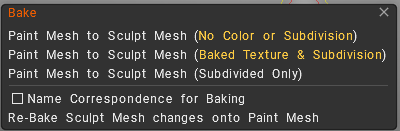
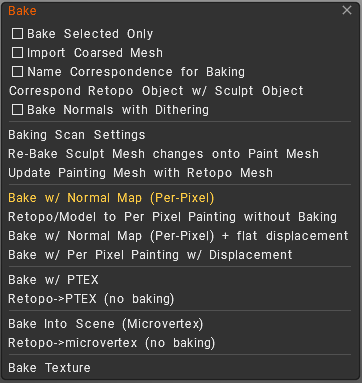
The baking process differs depending on the workspace where you are working, whether in Painting or Retopology.