• Español
  • Documentación 3DCoat
  • Chapters
    • Introducción a 3DCoat
    • Empezando
    • Interfaz y Navegación
    • Componentes del Brush
    • Espacios de trabajo Habitaciones
    • Scripting y Core API
    • Preguntas y respuestas
    • licensing
    • Tutoriales de formación
  • Pilgway
  • Products
    • 3DCoat
    • 3DCoatTextura
    • 3DCoatPrint
    • PBRLibrary
  • Blog Posts
  • Store
  • Español Español
    • English English
    • Українська Українська
    • Deutsch Deutsch
    • Français Français
    • 日本語 日本語
    • Русский Русский
    • 한국어 한국어
    • Polski Polski
    • 中文 (中国) 中文 (中国)
    • Português Português
    • Italiano Italiano
    • Suomi Suomi
    • Svenska Svenska
    • 中文 (台灣) 中文 (台灣)
    • Dansk Dansk
    • Slovenčina Slovenčina
    • Türkçe Türkçe
    • Nederlands Nederlands
    • Magyar Magyar
    • ไทย ไทย
    • हिन्दी हिन्दी
    • Ελληνικά Ελληνικά
    • Tiếng Việt Tiếng Việt
    • Lietuviškai Lietuviškai
    • Latviešu valoda Latviešu valoda
    • Eesti Eesti
    • Čeština Čeština
    • Română Română
    • Norsk Bokmål Norsk Bokmål
  • Creating 3D Character Using 3DCoat
  • Documentación 3DCoat
  • Chapters
    • Introducción a 3DCoat
    • Empezando
    • Interfaz y Navegación
    • Componentes del Brush
    • Espacios de trabajo Habitaciones
    • Scripting y Core API
    • Preguntas y respuestas
    • licensing
    • Tutoriales de formación
  • Pilgway
  • Products
    • 3DCoat
    • 3DCoatTextura
    • 3DCoatPrint
    • PBRLibrary
  • Blog Posts
  • Store
  • Español Español
    • English English
    • Українська Українська
    • Deutsch Deutsch
    • Français Français
    • 日本語 日本語
    • Русский Русский
    • 한국어 한국어
    • Polski Polski
    • 中文 (中国) 中文 (中国)
    • Português Português
    • Italiano Italiano
    • Suomi Suomi
    • Svenska Svenska
    • 中文 (台灣) 中文 (台灣)
    • Dansk Dansk
    • Slovenčina Slovenčina
    • Türkçe Türkçe
    • Nederlands Nederlands
    • Magyar Magyar
    • ไทย ไทย
    • हिन्दी हिन्दी
    • Ελληνικά Ελληνικά
    • Tiếng Việt Tiếng Việt
    • Lietuviškai Lietuviškai
    • Latviešu valoda Latviešu valoda
    • Eesti Eesti
    • Čeština Čeština
    • Română Română
    • Norsk Bokmål Norsk Bokmål
  • Creating 3D Character Using 3DCoat
Expand All Collapse All
  • Introducción a 3DCoat
  • Empezando
    • System requirements
    • Why 3DCoat is Unique?
    • Activando 3DCoat
    • error de inicio
      • Startup error Mac
    • Color management
    • Upgrading permanent license
    • Linux Setup
      • Linux initial setup per-user installation
      • Linux initial setup for system
      • Tablet setup
      • To GTK3 from GTK2
    • Estructura de carpetas
      • Custom documents folder
    • Diferentes formas de “resolución”
    • Tablet on Window
    • Import y Export
    • Applinks en 3DCoat
      • Enlace de aplicación Blender
        • Blender with the Applink in Linux
      • Blender 4.2/3/4/5 applink
      • Max Applink
      • Houdini applink
      • Lightwave uplink
  • Navigation
    • Diálogo de apertura (menú de inicio rápido)
    • Panel de navegación
    • Cámara y Navegación
      • Customize Navigation as Blender
    • Viewport Navigation Gizmo
    • Left tool panel
    •  Activity Bar
    • Navegación con dispositivos 3DConnexion
      • How to compile Spacenavd on non Ubuntu distro
    • Stylus doesn’t work in sculpting
    • Teclas de acceso directo
  • Interfaz y Navegación
    • Menú Archivo
    • Menú de edición
      • Calculate Curvature
      • Calculate Occlusion
      • Light Baking Tool
      • preferencias
    • Ver menú
    • Simetría
    • Textures
    • Calculate
    • Menú de capas
    • Menú de congelación
    • Hide
    • Bake
    • Curvas 2022
      • Menú Curvas
      • Curves Properties RMB
      • Rellenar con capa de malla
      • Scale of imported curves
    • Menú de ventanas
      • Paneles emergentes de Windows con pestañas
      • Controles deslizantes
    • Scripts
    • Addons
    • Capture
    • Menú de ayuda
    • personalización
    • Modificar o Crear nueva Sala
  • Componentes del Brush
    • Barra superior de Brush
    • Cepillos uso general
      • Crear pinceles y calcomanías
      • Hacer alfa a partir de la escultura actual
      • Crear un Brush a partir de un objeto 3D
      • Create brushes based on Curves
      • Load photoshop .abr brushes
    • trazos
      • Menú emergente de curvas
    • Opciones de Brush
    • Limitador de condiciones
    • Panel de tiras
    • Panel de plantillas
    • Materiales inteligentes
      • Agregar nuevas imágenes o materiales
      • Adjuntar un material inteligente a una capa
      • Import Quixel Material
    • Cómo crear ajustes preestablecidos para Brush
  • Espacios de trabajo Habitaciones
    • Painting
      • Painting de texturas y modos
        • Painting Per-Pixel
        • Painting de desplazamiento (Micro-Vertex)
        • Painting Ptex
        • Painting de Superficies (Polipintura)
      • Importación a la sala de Painting
        • Initial CC subdivision
        • UV Set smoothing
        • Sharp (hard) edge
        • Bloquear normales
        • Cargar nuevo diseño UV después de cambios de modelo
        • DAZ Genesis models into 3DCoat
      • Menús del espacio de trabajo de Painting
        • Edit menu
        • Menú Texturas
          • Herramientas Baking texturas
        • Esconder
        • Menú para la Bake Paint
        • El selector de color
      • Barra superior para la Painting
      • El panel de capas
        • El panel de fusión
        • Layer and Clipping Masks
      • Herramientas de la sala de Painting
      • Opacidad - Transparencia
      • Ajustar el espacio de trabajo
        • Conjunto de herramientas de ajuste
        • Exportación desde Tweak Room
      • Panel de vista previa de máscara/material
      • Exportación desde la sala de Painting
    • Espacio de trabajo UV
      • Barra superior UV
      • Panel de herramientas izquierdo UV
      • Panel de vista previa UV
      • Ejemplo de flujo de trabajo UV
      • Importación a la sala UV
      • Exportando desde la Sala UV
    • Retopología
      • Importando a la Sala Retopo
      • Menú Malla Retopo y Menú Hornear
        • Modo espejo virtual
      • Bake menu
        • Treat Poly Groups as Paint Objects
        • Baking guide
      • Barra superior
        • Seleccionar geometría
      • Panel de herramientas izquierdo en la sala de Retopología
        • Propósito general y función
        • Agregar Geometría
          • Herramienta Trazos en Retopología
        • Herramientas de ajuste Retopo
        • Herramientas UV
        • Comandos para sala de Retopología
      • AUTORETOPO
        • Autopo guide
      • Grupos polivinílicos
    • Esculpir
      • Sculpt Layer
      • Esculpir árbol
      • Opciones de Brush para esculpir
      • Top Bar
      • motor de Brush
      • Submenú Geometría
      • Esculpir menú de "clic derecho"
      • sombreadores
      • modo Voxel
        • Escultura pura de Voxel
        • Densidad y Resolución
        • Motor de arcilla
        • Herramientas de Voxel
        • Herramientas de superficie en Voxels
        • Herramientas de ajuste de Voxel
        • Painting volumétrica
        • Herramientas de objetos de Voxel
      • modo de superficie
        • Herramientas de superficie
        • Herramientas personalizadas de superficie
        • Herramientas de ajuste de superficie
        • Painting de superficies
        • Herramientas de objetos de superficie
        • Resolución multinivel
          • Multires tools
          • Multires adjust
          • Multires commands
      • Esculpir curvas
        • Curvas Spline
        • Splines model creation
      • Desplazamiento vectorial
      • Herramientas de transformación de superficies
        • Herramientas de transformación de Voxel
        • Instancer
        • Move
        • Pose
        • Fit
        • Reproject
        • Surface Array
      • Primitivas de Voxel y herramientas de Import
      • Booleanos en vivo
      • Comandos para la sala Sculpt
      • Import a Sculpt Room
      • Exportación desde Sculpt Room
    • Prestar
      • Comparison of different roughness values
      • Funciones del panel de procesamiento
      • Placa giratoria
      • Fakebake la iluminación -sin PBR-
    • Factures
      • flujo de trabajo
    • más simple
    • Modelado
      • Mesh Menu
      • Panel de herramientas izquierdo en la sala de modelado
        • Agregar geometría
          • Seleccionado
        • Retocar
        • Smart Hybrid
        • UV
          • Comandos
        • Malla entera
      • Ejemplo de superficie loft de Fluffy
      • Bloqueo por Poeboi
      • Import Zbrush Polygroups for UV mapping
    • Kitbash - Creación rápida de modelos 3D
      • Create kitbash
      • Left tool panel Kitbash
    • 3DPrint
    • Photogrammetry
      • How to install Reality Capture
      • Reality Capture doesn’t show up ?
    • Malla a habitación NURBS
    • Nodes
      • Sculpt shaders Biblioteca de nodos
  • Scripting y Core API
    • Scripting
    • Core API
    • API de Python
  • 3DCoatPrint gratis

Why 3DCoat is Unique?

1608 views 1

Written by Serhii
July 23, 2025
Interface & Navigation
Workspaces Rooms
Key Features

3DCoat is an advanced 3D creation suite for creating and painting 3D models (available in 70 languages), specializing in such 3D technologies: voxel and polygonal Sculpting , Concept Art Making, various types of Retopology (automatic, manual, and smart with the curves), UV Editing and UV mapping (manually and automatically here and here ), Hand-painting and PBR Texture Painting, Lowpoly modeling, Rendering, Photogrammetry with help of Reality Capture (easy scans cleaning) and has free PBR Library. Only 3DCoat offers the unique in the industry true volumetric painting feature, allowing you to paint a volume and create a 3D texture by adding color to voxels.

Where other applications in this market segment tend to specialize in one specific task, such as Digital Sculpting or Texture Painting, 3DCoat provides a unified pipeline for asset creation and 3D visualizations such as still images.

For instance, you can make a comparative analysis of 3DCoat with other applications by entering “3DCoat vs Zbrush” or “3DCoat vs Substance Painter” in the Google search bar – Google Gemini will give you that analysis. Similarly, you can make an analysis of “3DCoat vs Blender” using ChatGPT.

Additionally, you can create a comparative table using ChatGPT: “3DCoat vs Blender vs ZBrush vs Substance Painter”.

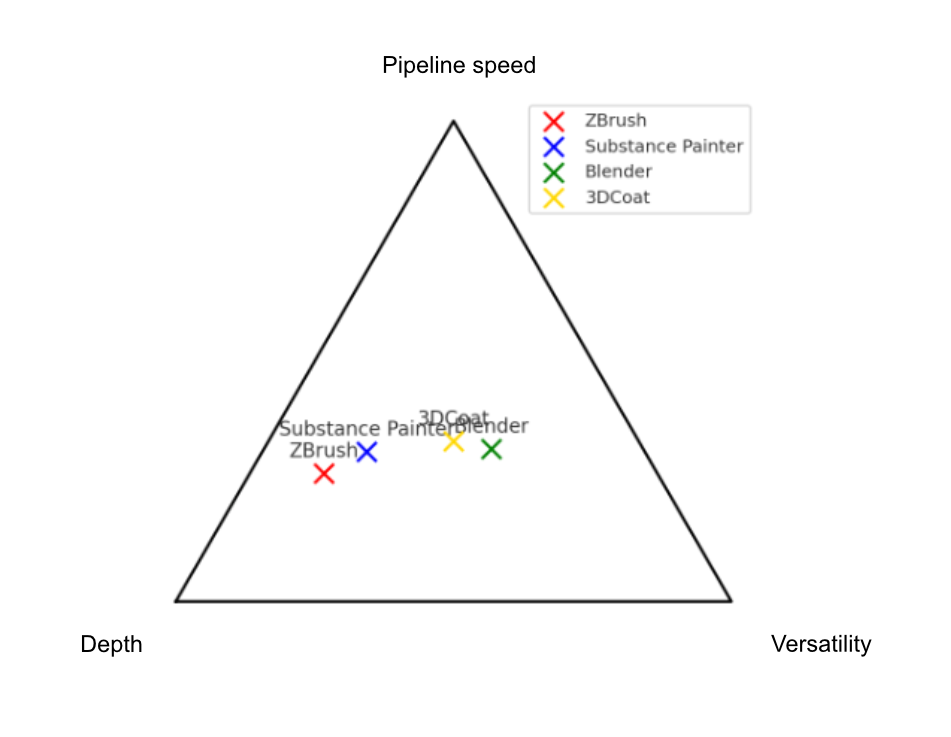
As a result, considering the breadth of pipeline coverage, 3DCoat can be regarded in some sense as the optimum golden mean between Blender, ZBrush, and Substance Painter, offering comprehensive professional capabilities in sculpting, retopology, UV editing, texturing, and photogrammetry with the help of RealityCapture.

Thus, it covers the entire cycle (sculpt → retopo → UV → PBR texturing → export) and in each of these areas, it has no critical failures – everything is at a level suitable for production.

Here is the approximate picture that ChatGPT gave concerning 3DCoat as a golden mean:
Alternatively, 3DCoat can be a valuable and perfect companion for any of the tools mentioned above.

To learn 3DCoat, you can start with AntonTenitsky’s free Intro to 3DCoat playlist.

We also strongly recommend Anton’s Training Course for Beginners, “Intro to 3DCoat: From Noob to Cook”. It’s a great way to learn the basic techniques and get started with 3DCoat. It contains 153 short videos, 1-3 minutes per tool (nearly 8 hours). It makes navigation and studying convenient.

The course is designed to guide you through the fundamental features of 3DCoat, covering key topics like sculpting, manual and auto-retopology, UV mapping, baking texturing, and rendering. The tutorial also bridges the workflow between 3DCoat and Blender, showing how to set up scenes and create camera animations for professional-quality presentations. For those interested in obtaining the course, we have a Special Offer: use the promo code 3DCOAT30 to get a 30% discount. (Note: Gumroad automatically proposes you to leave a tip. However, it’s optional, and you can adjust/remove it before making your payment.)

Videos of latest releases (YouTube channel is here)


Main Technologies Inside 3DCoat:


Texturing (hand-painting and PBR)

  • MicroVertex, Per Pixel or Ptex Painting, and Polypaint approaches.
  • Realtime Physically Based Rendering viewport with HDRL
  • Smart Materials with easy set-up options
  • Multiple Paint Layers. Popular blending modes and Layer groups.
  • Tight interaction with Photoshop.
  • Texture size up to 16k.
  • Fast Ambient Occlusion and Curvature map calculation.
  • Rich toolset for all kinds of painting tasks, and more…
  • PBR texturing is described here
  • Hand painting is described in this article

Digital Sculpting (voxels and surface)

  • Voxel sculpting with no topological constraints
  • Complex boolean operations
  • Vox hide feature
  • Live booleans
  • Soft booleans
  • Dozens of fast and fluid sculpting brushes
  • Adaptive dynamic tesselation
  • Dozens of fast and fluid sculpting brushes
  • More about digital sculpting in this article、
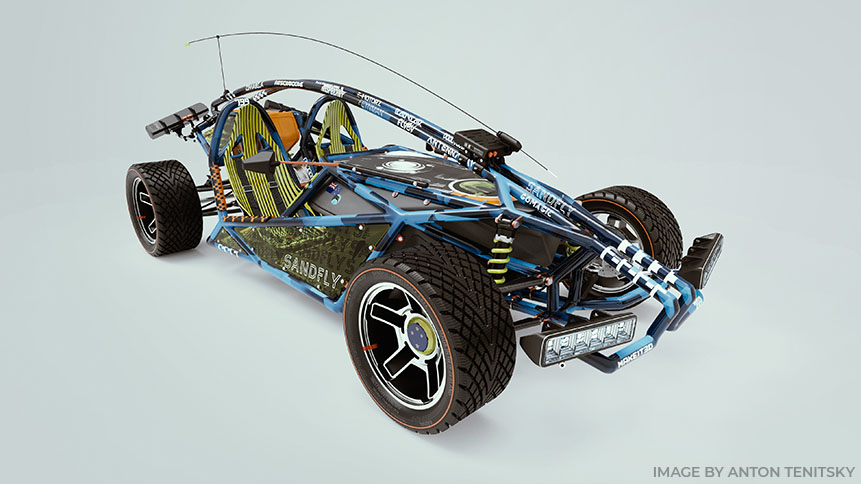
Modeling

  • Classic polygonal modeling is fully supported.
  • Move, Rotate, Scale, Extrude, Inset, and other popular instruments.
  • Full 3d production pipeline became even easier.
  • Splines and Joints – cool way for fast modeling.
  • Kitbash Room is specially designed to perform fast dressing of complex scenes.
  • Use the extensive existing model library, or create your own.
  • Extensive library of primitives.
  • Basic Principles Of Low Poly Modeling

Retopology Tools

  • Auto-retopology (AUTOPO) with user-defined edge loops.
  • Retopology by decimation.
  • Auto Retopology with Instant Meshes addon.
  • Fast and easy-to-use Manual Retopo tools.
  • Smart Retopology toolset
  • Possibility to import reference mesh for retopology
  • Use your current low-poly mesh as your retopo mesh.
  • Retopo groups with color palettes for better management.
  • Advanced baking settings dialog.
  • Library of Retopo models.
  • See more…

UV Mapping

  • Professional toolset for creating and editing UV-sets
  • Auto UV mapping
  • Udim Support.
  • Native Global Uniform (GU) unwrapping algorithm
  • Multiple UV-sets support and management
  • Support ABF, LSCM, and Planar unwrapping algorithms
  • Individual islands tweaking
  • Several checkers views
  • More about UV mapping you can read in this article
Rendering

  • Physically Based Rendering.
  • High Dynamic Range Lighting.
  • Screen Space Reflections and Lights.
  • Renderman support.
  • Multiple colored lights.
  • Render passes.
  • DOF and other effects.
  • Node editor for Environment and Post Effects
Concept art making

  • 3DCoat really shines when making Concept Arts.
  • With Voxels technology, you don’t need to worry about any technical aspects.
  • Turn your ideas into a great concept in no time

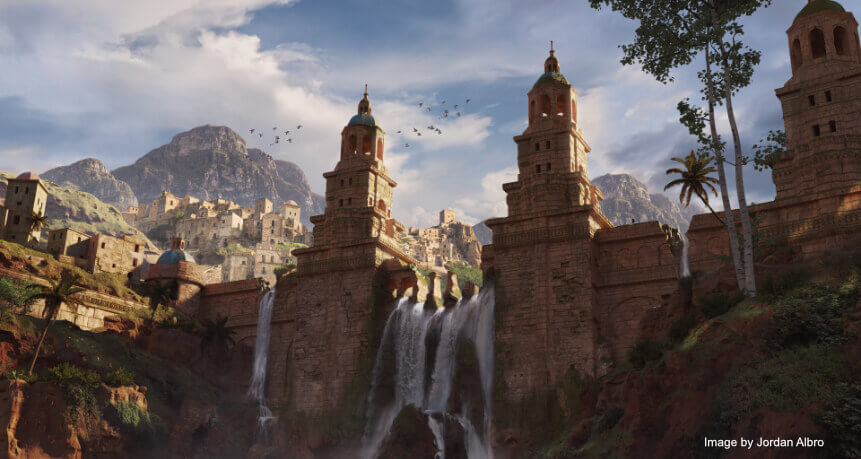
Everything starts with a Concept!
It is very convenient now to use 3d software in concept art production pipeline.
Usually it starts with a rough or detail 3d blocks, separate 3d objects or even complete 3d scenes with later paintover in Photoshop or other 2d image editor.


3DCoat Tutorials

Find more tutorial videos on our YouTube channel

3DCoat YouTube channel

Was this helpful?

1 Yes  No
Related Articles
  • Surface Array
  • Top Bar
  • Curves Properties RMB
  • Left tool panel Kitbash
  • Create kitbash
  • Color management
Previously
System requirements
Up Next
Activando 3DCoat
AI:
Hi! How can I help you?
Attention: This is a beta version of AI chat. Some answers may be wrong. See full version of AI chat