• ไทย
  • เอกสาร 3DCoat
  • Chapters
    • รู้เบื้องต้นเกี่ยวกับ 3DCoat
    • เริ่มต้นใช้งาน
    • อินเทอร์เฟซและการนำทาง
    • ส่วนประกอบของ Brush
    • ห้องพื้นที่ทำงาน
    • Scripting และ Core API
    • คำถามและคำตอบ
    • licensing
    • บทแนะนำการฝึกอบรม
  • Pilgway
  • Products
    • 3DCoat
    • 3DCoatTextura
    • 3DCoatPrint
    • PBRLibrary
  • Blog Posts
  • Store
  • ไทย ไทย
    • English English
    • Українська Українська
    • Español Español
    • Deutsch Deutsch
    • Français Français
    • 日本語 日本語
    • Русский Русский
    • 한국어 한국어
    • Polski Polski
    • 中文 (中国) 中文 (中国)
    • Português Português
    • Italiano Italiano
    • Suomi Suomi
    • Svenska Svenska
    • 中文 (台灣) 中文 (台灣)
    • Dansk Dansk
    • Slovenčina Slovenčina
    • Türkçe Türkçe
    • Nederlands Nederlands
    • Magyar Magyar
    • हिन्दी हिन्दी
    • Ελληνικά Ελληνικά
    • Tiếng Việt Tiếng Việt
    • Lietuviškai Lietuviškai
    • Latviešu valoda Latviešu valoda
    • Eesti Eesti
    • Čeština Čeština
    • Română Română
    • Norsk Bokmål Norsk Bokmål
  • Creating 3D Character Using 3DCoat
  • เอกสาร 3DCoat
  • Chapters
    • รู้เบื้องต้นเกี่ยวกับ 3DCoat
    • เริ่มต้นใช้งาน
    • อินเทอร์เฟซและการนำทาง
    • ส่วนประกอบของ Brush
    • ห้องพื้นที่ทำงาน
    • Scripting และ Core API
    • คำถามและคำตอบ
    • licensing
    • บทแนะนำการฝึกอบรม
  • Pilgway
  • Products
    • 3DCoat
    • 3DCoatTextura
    • 3DCoatPrint
    • PBRLibrary
  • Blog Posts
  • Store
  • ไทย ไทย
    • English English
    • Українська Українська
    • Español Español
    • Deutsch Deutsch
    • Français Français
    • 日本語 日本語
    • Русский Русский
    • 한국어 한국어
    • Polski Polski
    • 中文 (中国) 中文 (中国)
    • Português Português
    • Italiano Italiano
    • Suomi Suomi
    • Svenska Svenska
    • 中文 (台灣) 中文 (台灣)
    • Dansk Dansk
    • Slovenčina Slovenčina
    • Türkçe Türkçe
    • Nederlands Nederlands
    • Magyar Magyar
    • हिन्दी हिन्दी
    • Ελληνικά Ελληνικά
    • Tiếng Việt Tiếng Việt
    • Lietuviškai Lietuviškai
    • Latviešu valoda Latviešu valoda
    • Eesti Eesti
    • Čeština Čeština
    • Română Română
    • Norsk Bokmål Norsk Bokmål
  • Creating 3D Character Using 3DCoat
Expand All Collapse All
  • รู้เบื้องต้นเกี่ยวกับ 3DCoat
  • เริ่มต้นใช้งาน
    • System requirements
    • Why 3DCoat is Unique?
    • การเปิดใช้งาน 3DCoat
    • ข้อผิดพลาดในการเริ่มต้น
      • Startup error Mac
    • Color management
    • Upgrading permanent license
    • Linux Setup
      • Linux initial setup per-user installation
      • Linux initial setup for system
      • Tablet setup
      • To GTK3 from GTK2
    • โครงสร้างโฟลเดอร์
      • Custom documents folder
    • รูปแบบต่างๆ ของ “การแก้ปัญหา”
    • Tablet on Window
    • Import และ Export
    • Applinks ใน 3DCoat
      • ลิงค์แอป Blender
        • Blender with the Applink in Linux
      • Blender 4.2/3/4/5 applink
      • Max Applink
      • Houdini applink
      • Lightwave uplink
  • Navigation
    • การเปิดกล่องโต้ตอบ (เมนูเริ่มด่วน)
    • แผงนำทาง
    • กล้องและระบบนำทาง
      • Customize Navigation as Blender
    • Viewport Navigation Gizmo
    • Left tool panel
    •  Activity Bar
    • การนำทางโดยใช้อุปกรณ์ 3DConnexion
      • How to compile Spacenavd on non Ubuntu distro
    • Stylus doesn’t work in sculpting
    • ปุ่มลัด
  • อินเทอร์เฟซและการนำทาง
    • เมนูไฟล์
    • แก้ไขเมนู
      • Calculate Curvature
      • Calculate Occlusion
      • Light Baking Tool
      • การตั้งค่า
    • ดูเมนู
    • สมมาตร
    • Textures
    • Calculate
    • เมนูเลเยอร์
    • เมนูแช่แข็ง
    • Hide
    • Bake
    • เส้นโค้ง 2022
      • เมนูเส้นโค้ง
      • Curves Properties RMB
      • เติมชั้นตาข่าย
      • Scale of imported curves
    • เมนู Windows
      • แผงป๊อปอัพ Windows แบบแท็บ
      • สไลเดอร์
    • Scripts
    • Addons
    • Capture
    • เมนูช่วยเหลือ
    • การปรับแต่ง
    • แก้ไขหรือสร้างห้องใหม่
  • ส่วนประกอบของ Brush
    • แถบด้านบน Brush
    • แปรงใช้งานทั่วไป
      • สร้างแปรงและสติกเกอร์
      • สร้างอัลฟ่าจากการแกะสลักปัจจุบัน
      • สร้าง Brush จากวัตถุ 3 มิติ
      • Create brushes based on Curves
      • Load photoshop .abr brushes
    • จังหวะ
      • เมนูป๊อปอัพเส้นโค้ง
    • ตัวเลือก Brush
    • ตัวจำกัดเงื่อนไข
    • แผงแถบ
    • แผงลายฉลุ
    • วัสดุอัจฉริยะ
      • เพิ่มรูปภาพหรือวัสดุใหม่
      • แนบวัสดุอัจฉริยะเข้ากับเลเยอร์
      • Import Quixel Material
    • วิธีสร้างพรีเซ็ตสำหรับ Brush
  • ห้องพื้นที่ทำงาน
    • Painting
      • Painting พื้นผิวและโหมด
        • Painting Per-Pixel
        • Painting แทนที่ (Micro-Vertex)
        • Ptex Painting
        • Painting พื้นผิว (Polypainting)
      • นำเข้าสู่ห้อง Painting
        • Initial CC subdivision
        • UV Set smoothing
        • Sharp (hard) edge
        • ล็อคค่าปกติ
        • โหลดเค้าโครง UV ใหม่หลังจากการเปลี่ยนแปลงโมเดล
        • DAZ Genesis models into 3DCoat
        • ID map
      • เมนูของพื้นที่ทำงาน Painting
        • Edit menu
        • เมนูพื้นผิว
          • เครื่องมือ Baking พื้นผิว
        • ซ่อน
        • เมนูสำหรับ Bake Paint
        • ตัวเลือกสี
      • แถบด้านบนสำหรับ Painting
      • แผงเลเยอร์
        • แผงผสม
        • Layer and Clipping Masks
      • เครื่องมือห้อง Painting
      • ความทึบ - ความโปร่งใส
      • ปรับแต่งพื้นที่ทำงาน
        • ปรับแต่งชุดเครื่องมือ
        • ส่งออกจากห้องปรับแต่ง
      • แผงแสดงตัวอย่างหน้ากาก/วัสดุ
      • ส่งออกจากห้อง Painting
    • พื้นที่ทำงาน UV
      • แถบด้านบน UV
      • แผงเครื่องมือ UV ด้านซ้าย
      • แผงแสดงตัวอย่าง UV
      • ตัวอย่างขั้นตอนการทำงาน UV
      • นำเข้าห้อง UV
      • ส่งออกจากห้อง UV
    • รีโทโพโลยี
      • นำเข้าสู่ห้อง Retopo
      • เมนู Retopo Mesh และเมนู Bake
        • โหมดกระจกเสมือน
      • Bake menu
        • Treat Poly Groups as Paint Objects
        • Baking guide
      • ท็อปบาร์
        • เลือกรูปทรงเรขาคณิต
      • แผงเครื่องมือด้านซ้ายในห้อง Retopology
        • วัตถุประสงค์และหน้าที่โดยรวม
        • เพิ่มรูปทรงเรขาคณิต
          • เครื่องมือ Strokes ใน Retopology
        • เครื่องมือปรับแต่ง Retopo
        • เครื่องมือ UV
        • คำสั่งสำหรับห้อง Retopology
      • AUTORETOPO
        • Autopo guide
      • โพลีกรุ๊ป
    • ปั้น
      • Sculpt Layer
      • ต้นไม้แกะสลัก
      • ตัวเลือก Sculpt Brush
      • Top Bar
      • เครื่องยนต์ Brush
      • เมนูย่อยเรขาคณิต
      • แกะเมนู “คลิกขวา”
      • เฉดสี
      • โหมด Voxel
        • การแกะสลัก Voxel บริสุทธิ์
        • ความหนาแน่นและความละเอียด
        • เครื่องยนต์ดิน
        • เครื่องมือ Voxel
        • เครื่องมือพื้นผิวบน Voxels
        • เครื่องมือปรับแต่ง Voxel
        • Painting เชิงปริมาตร
        • เครื่องมือวัตถุ Voxel
      • โหมดพื้นผิว
        • เครื่องมือพื้นผิว
        • เครื่องมือปรับแต่งพื้นผิว
        • เครื่องมือปรับพื้นผิว
        • Painting พื้นผิว
        • เครื่องมือวัตถุพื้นผิว
        • ความละเอียดหลายระดับ
          • Multires tools
          • Multires adjust
          • Multires commands
      • ปั้นโค้ง
        • เส้นโค้งสไปลน์
        • Splines model creation
      • การแทนที่เวกเตอร์
      • เครื่องมือแปลงพื้นผิว
        • เครื่องมือแปลง Voxel
        • Instancer
        • Move
        • Pose
        • Fit
        • Reproject
        • Surface Array
      • Voxel Primitives & เครื่องมือ Import
      • บูลีนสด
      • คำสั่งสำหรับห้อง Sculpt
      • Import สู่ห้องแกะสลัก
      • ส่งออกจากห้องแกะสลัก
    • แสดงผล
      • Comparison of different roughness values
      • ฟังก์ชั่น Render Panel
      • จานเสียง
      • อบแสงปลอม - ไม่ใช่ PBR-
    • Factures
      • ขั้นตอนการทำงาน
    • ง่ายที่สุด
    • การสร้างแบบจำลอง
      • Mesh Menu
      • แผงเครื่องมือด้านซ้ายในห้องสร้างแบบจำลอง
        • เพิ่มเรขาคณิต
          • เลือกแล้ว
        • บิด
        • Smart Hybrid
        • UV
          • คำสั่ง
        • ตาข่ายทั้งหมด
      • ตัวอย่างพื้นผิวห้องใต้หลังคาโดย Fluffy
      • การปิดกั้นโดย Poeboi
      • Import Zbrush Polygroups for UV mapping
    • Kitbash - การสร้างโมเดล 3 มิติอย่างรวดเร็ว
      • Create kitbash
      • Left tool panel Kitbash
    • 3DPrint
    • Photogrammetry
      • How to install Reality Capture
      • Reality Capture doesn’t show up ?
    • ตาข่ายถึงห้อง NURBS
    • Nodes
      • Sculpt shaders Nodes Library
  • Scripting และ Core API
    • Scripting
    • Core API
    • ไพทอน API
  • ฟรี 3DCoatPrint

Curves Properties RMB

148 views 0

Written by Carlos
October 23, 2025

Pressing RMB menu over created curves on viewport or over the curve layer on Curve Tree to access or modify the curve properties.

You can turn on/off this option on Edit > Preferences > Viewport

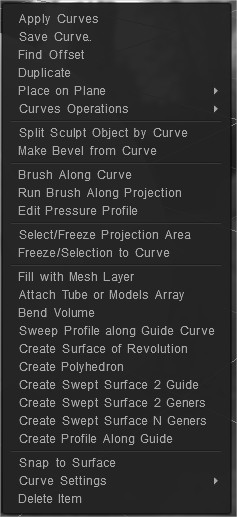
RMB commands panel


Apply Curves Apply the selected Curves.
Save Curve: Save the selected Curve.
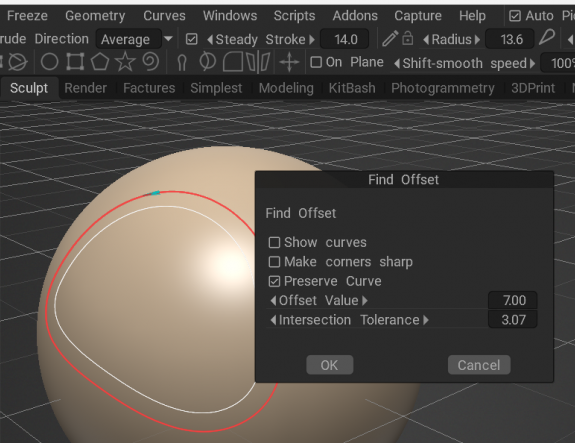
Find Offset: Create a new curve duplicating the original to a new position based on offset.

  • Show new curve: Draw real offset for extruding.
  • Make corners sharp: Make corners sharp.
  • Preserve curve: don’t delete the original curve used as source.
  • Offset value: distance to the base curve.
  • Intersection Tolerance: Change the value to adjust the number of intersection points.

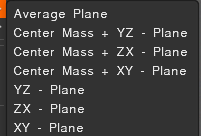
Place on Plane


  • Average plane
  • Center mass + YZ – plane
  • Center masss + ZX – plane
  • Center mass + XY – plane
  • YZ – plane
  • ZX – plane
  • XY – plane

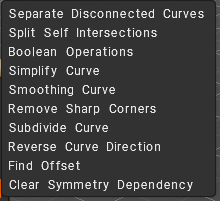
Curves Operations


  • Separate Disconnected Curves:
  • Split Self Intersections: This command adds self-intersection points of the curve. The intersection is also the case if the points on the curves in the space are closer than the intersection tolerance value; by changing which, you can get more or fewer intersection points.

When you select “Split to segments,” you get a subdivision of the curve into successive segments. When you select “Split to clusters,” you get a subdivision of the curve into closed sub-clusters.

  • Boolean Operations: This command performs the operations of intersection, union, and subtraction over curves.

First of all, the intersection points of the curves are located, and then the operations are performed. The intersection tolerance regulates the number of intersection points. The intersection is considered to be points lying at a distance less than this value.

  • Simplify Curve: This command deletes the curve points so that the new curve is as similar as possible to the original curve.
    The number of points is controlled by the parameter “multiplier”, which varies from 0 to 1.
  • Smoothing Curve: This command smooths the curve. A variable degree specifies the degree of smoothing, the larger the value, the more iterations of smoothing will be applied to the curve.
    Smoothing is done in two ways.
    – The first method is averaging (check box “Simple average method” is active). Each point is replaced by the average value of this point and two adjacent points.
    – The second method (check box “Simple average method” is not active) is that the curve is interpolated and the middle point is replaced by a point on the resulting curve.
    If the “Subdivide to uniform segments” check box is active, the curve is divided into segments of approximately the same length (this length can be adjusted with the help of the slider), and then smoothing is performed.
  • Remove sharp corners: This tool removes curve angles other than 180 degrees, replacing them with a circular arc of a given radius. If the option “Apply only to selected vertices” is selected, the operation will be performed at all selected vertices of the curve, regardless of the angle. If this option is not selected, then the operation is performed at all vertices of the curve, which the algorithm considers suitable.
  • Subdivide Curve: Automatically add vertices to the curve. This command will add one point between every two points of the curve.
  • Reverse Curve Direction: Invert curve direction.
  • Find Offset:
  • Clear Symmetry Dependency: The operation removes the dependence on the curve from which it was obtained as a result of applying symmetry.

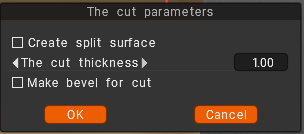
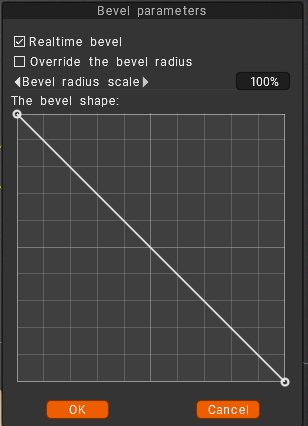
Split Sculpt object by Curve: Cutting the model with the curve, applying the bevel. Split and joints may use curves as well.


Make Bevel from Curve: You may do the bevel via the RMB over the curve and look at how the bevel looks in real time.


Brush along curve: Applies brush along the curve with spacing and jitter.
Run brush along projection:
Edit Pressure Profile: Define how pressure will be distributed along the stroke.

Select/Freeze projection area: Select/Freeze area within closed curves projection.
Freeze/Selection to curve:


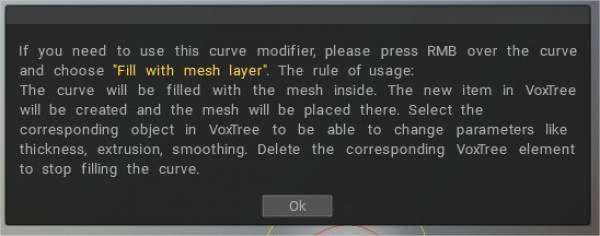
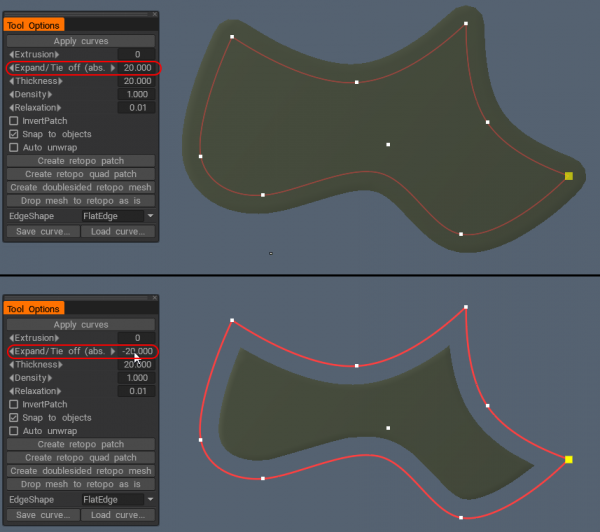
Fill with mesh layer: The curve will be filled with the mesh inside.

The new item in Sculpt Tree will be created, and the mesh will be placed there.
Select the corresponding object in Sculpt Tree to be able to change parameters like thickness, extrusion, and smoothing.
Delete the corresponding Sculpt Tree element to stop filling the curve.

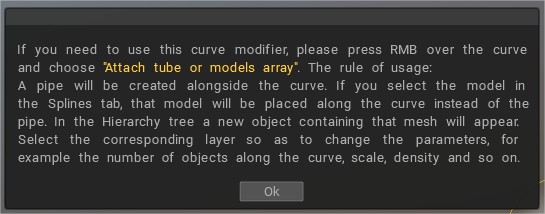
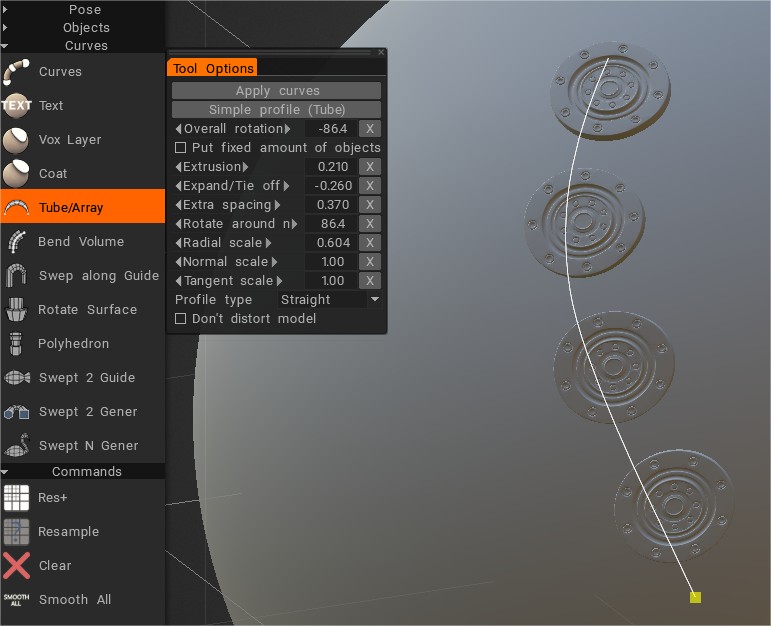
Attach tube or models array: A pipe will be created alongside the curve.

To add new geometry over the mesh’s surface > Select Tube/Array tool. Draw a curve and choose Attach tube or models array.

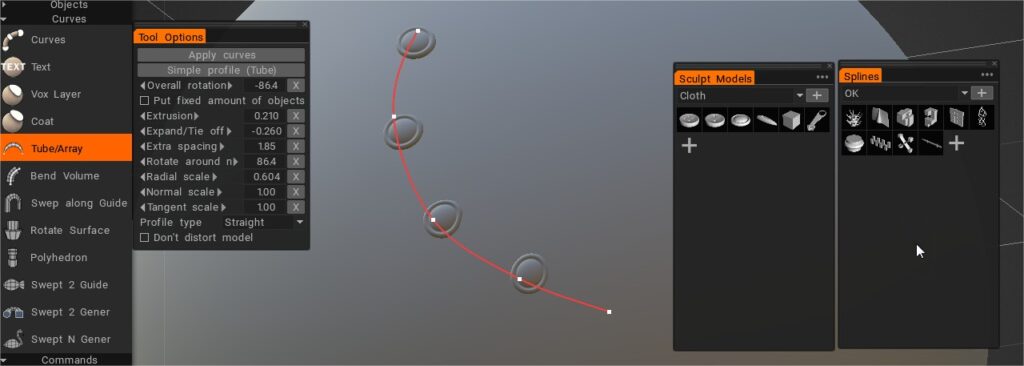
Splines and also Sculpt models can be used to fill with new geometry (attach tube or models array).

If you select the model in the Splines tab, that model will be placed along the curve instead of the pipe. In the Hierarchy tree, a new object containing that mesh will appear. Select the corresponding layer so as to change the parameters, for example, the number of objects along the curve, scale, density, and so on.
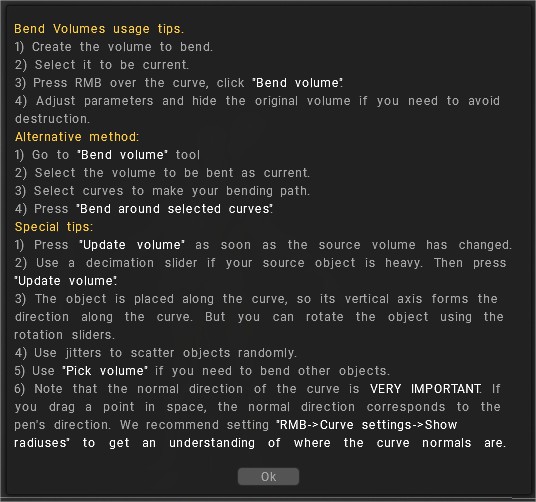
Bend Volume: Bend the object around the curve.

Bend Volume: Bend the object around the curve.

Sweep profile along Guide Curve: The sweep profile will be along the selected Guide Curve. After the “Tool Options” dialog appears,
You need select profile-curve. The new item in Sculpt tree will be created, and the mesh will be placed there.
Select the corresponding object in Sculpt tree to be able to change parameters like thickness, Angle, Twist-Angle, etc.
Delete the corresponding Sculpt tree element to stop filling the curve.

You can vary the curve shape using the option “Use Profile Graph”.

Create Rotate Surface: The Rotate surface will be generated by revolution of the selected profile around the selected curve-axis.
After the “Tool Options dialog” appears, you need to select the curve axis.
The new item in Sculpt tree will be created, and the mesh will be placed there. Select the corresponding object in Sculpt tree to be able to change parameters like thickness, Angle, twist angle, etc. Delete the corresponding Sculpt tree element to stop filling the curve.
Create Polyhedron: The Polyhedron will be generated by revolution and moving the selected profile around the selected curve-axis. After the “Tool Options dialog” appears, you need to select the curve axis.
The new item in Sculpt tree will be created, and the mesh will be placed there. Select the corresponding object in Sculpt tree to be able to change parameters like thickness, Quantity of facets, and smoothing.
Delete the corresponding Sculpt tree element to stop filling the curve.

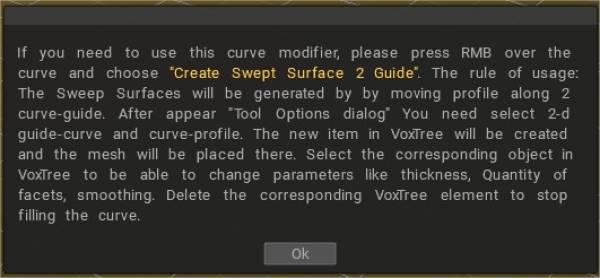
Create Swept Surface 2 Guide:


The Sweep Surfaces will be generated by moving the profile along two curve-guide. After the “Tool Options dialog” appears, you need to select 2-d guide-curve and curve-profile.

The new item in Sculpt Tree will be created, and the mesh will be placed there. Select the corresponding object in Sculpt Tree to be able to change parameters like thickness, Quantity of facets, and smoothing. Delete the corresponding Sculpt Tree element to stop filling the curve.
You also can vary the curve shape using the option “Use Profile Graph”.

Create Swept Surface 2 Geners: The Sweep Surface will be generated by moving of 2 profiles along the selected guide curve. After the “Tool Options dialog” appears, you need select curve-profile.
The new item in Sculpt Tree will be created, and the mesh will be placed there. Select the corresponding object in Sculpt tree to be able to change parameters like thickness, Quantity of facets, and smoothing. Delete the corresponding Sculpt tree element to stop filling the curve.

Create Swept Surface N Geners: The Sweep Surfaces will be generated by moving N profiles along two curve-guide.

After the “Tool Options dialog” appears, you need select 2-d guide and curve profiles. The new item in Sculpt tree will be created, and the mesh will be placed there.

Select the corresponding object in Sculpt tree to be able to change parameters like thickness, Quantity of facets, and smoothing.
Delete the corresponding Sculpt tree element to stop filling the curve.

– Now with much better quality of “Expand/tie off” for patches and tubes for curves modifiers.


Snap to surface: Snap curves to the surface.

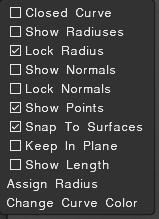
Curve Settings


  • Closed Curve: Draw a closed curve.
  • Show radiuses
  • Lock Radius
  • Show normals:
  • Lock normals: Don’t recalculate normals, use normals directly from the object file. If you subdivide mesh this option will be ignored.
  • Show points
  • Snap To Surfaces
  • Keep In Plane
  • Show length
  • Assign radius: Assign the same (current) radius to all points of the curve..
  • Change curve color

Delete Item: Delete selected curve.

“Bend volume” tool to bend objects in-scene along the curve added.

Tutorials


Curve Tools: by Anton Tenitsky

Was this helpful?

Yes  No
Related Articles
  • Factures
  • ID map
  • Surface Array
  • Top Bar
  • Left tool panel Kitbash
  • Create kitbash
Previously
เมนูเส้นโค้ง
Up Next
เติมชั้นตาข่าย
AI:
Hi! How can I help you?
Attention: This is a beta version of AI chat. Some answers may be wrong. See full version of AI chat